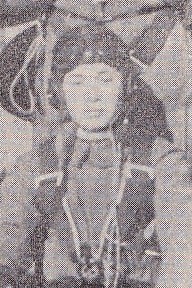
Last Letters of Corporal Masahiko Ara to His Parents
On May 11, 1945, Corporal Masahiko Ara took off from Miyakonojō East Airfield
and died in a special (suicide) attack west of Okinawa at the age of 18. He was
a member of the 60th Shinbu Special Attack Squadron (formed at Akeno Air Base on
March 29, 1945) and piloted an Army Hayate Type 4 Fighter (Allied code name of
Frank). After his death in a special attack, he received a promotion to Second
Lieutenant. He was from Nakagawa-gun in Hokkaidō Prefecture and was a member of
the 15th Class of the Army Youth Pilot (Rikugun Shōhi) training program.
He wrote the following final letter, which includes a death poem in tanka
form (31-syllable poem with lines of 5-7-5-7-7 syllables):
Dear Parents,
Thank you for your care in all sorts of ways for the long period of
twenty years. Please forgive me for always causing you worries and for
my lack of filial piety.
Now I gladly depart after receiving an Imperial command. It is
disappointing that there is no big prey, but I certainly will do my best
until the end and meet everyone's expectations. In spite of this, I will do
my bit to both avenge my older brother and to take revenge on the enemies of
the spirits of Imperial military men who sacrificed their lives for our
country. Please give my regards to our relatives, Mr. Ogawa, my classmates,
the villagers, and Principal Haneda.
Now I depart
To the south
Praying to the east
In the Empire
Good fortune for ten thousand generations
I pray that you strive until the end to take good care of yourselves and
that as soon as possible Japan's Rising Sun flag will be flown in victory.
Long live the Empire of Japan.
Sincerely
He also wrote the following short last letter to his parents:
Preliminaries omitted.
Please feel at ease since I am in very good health.
My personal effects were sent to Older Sister Chizuko.
Please take care of yourselves.
Sincerely
No reply needed. This is all.
On February 10, 1945, enemy B-29 bombers attacked the Imperial capital
(Tōkyō). Unit Commander Toshizō Kurai obtained very great battle success,
and many witnessed his incomparable bravery and fierce fighting. Corporal
Masahiko Ara wrote the following letter to his parents after Kurai brought down
an enemy B-29 bomber by crashing into it.
Dear Parents,
It has been a while since I wrote to you. I trust that you are in good
health. An attack by enemy planes has inspired me even more to strive to
carry out my mission.
Unit Commander Second Lieutenant Kurai, who we look up to as our kind
father, intercepted a B-29 bomber the other day. He realized a very great
battle achievement when he in the end succeeded in a heroic and courageous
taiatari (body-crashing) attack and died in battle. We certainly will follow after his spirit.
To Young Cherry Blossoms who will not follow after:
Ah, Divine Eagle
Now gone
We will carry out
Kanai's wishes
Brave retribution
For the Empire
Plum trees soon will bloom and smell sweet. In this time of continuing
cold, I pray that you take good care of yourselves.
Corporal Masahiko Ara's father Iogo wrote the following comments for the 1977
book edited by Shun'ichi Terai about the Miyakonojō Air Base Hayate Special
Attack Shinbu Unit:
Even though he had not reached twenty years of age and relatively was not
blessed with a healthy constitution, I cannot help but become emotional when
I remember the care of everyone who gave him guidance and all his comrades
who provided him friendship that allowed him to make great efforts.
Since he was very far from home and to some extent was involved
in public
service based on the situation in those days, visits to see him were not
permitted. I am overcome with self-reproach that now I feel that he did not
even have the opportunity to be in loving contact with his real parents and
siblings who had been raised in an old-fashioned way from long ago in a
family-loving environment.
I am truly thankful from the bottom of my heart for the kindness and
assistance of his squadron commander and all of his comrades, which
surpassed that of his parents.
On March 20, 1944, Masahiko's older brother died heroically in battle
when he tried to go from the Saipan coast to the main Army unit in the woods in
the mountains in order to deliver a message with orders. He fell when shot
down by enemy machine gun fire while calling out banzai and the name
of a senior officer. I got this information from my son's comrade who was
hiding in a nearby bunker 30 meters away who heard my son and who
unexpectedly survived.
Masahiko also thought that his older brother committed gyokusai
("shattering jewel," which signifies noble death) at Iwo Jima. Their mother
(my wife) passed away due to heart disease last year on July 18 at the age
of 79. She knew that her sons each obtained a place to die, and she was
satisfied and did not experience any anguish. She had a peaceful death
with even a smile on her face. She is greatly missed by everyone, and I
truly appreciate her.
Masahiko's older brother did not have any male children, and my daughter
married into another family, so I do not have an heir. Although there is no excuse
to give to prior generations, I have resigned myself to fate. Now I am
living together in the home of the grandchild of my daughter's family. This
year in March I passed 85 years of age and entered into my 86th year. I am busy
with my daughter, grandchildren, and great-grandchildren as my companions.
Letters and the comments of Masahiko Ara's father translated by Bill Gordon
April 2026
The letters and the comments of Masahiko Ara's father come from Terai (1977,
55-57). The biographical information in
the first paragraph comes from Chiran Tokkō
Irei Kenshō Kai (2005, 154), Osuo (2005, 199), and Terai (1977, 55).
Related Web Pages
Sources Cited
Chiran Tokkō Irei Kenshō Kai (Chiran Special Attack
Memorial Society), ed. 2005. Konpaku no kiroku: Kyū rikugun tokubetsu
kōgekitai chiran kichi (Record of departed spirits: Former Army Special
Attack Corps Chiran Base). Revised edition, originally published in 2004. Chiran Town, Kagoshima
Prefecture: Chiran Tokkō Irei Kenshō Kai.
Osuo, Kazuhiko. 2005. Tokubetsu kōgekitai no kiroku (rikugun hen)
(Record of special attack corps (Army)). Tōkyō: Kōjinsha.
Terai, Shun'ichi, ed. 1977. Kōkū Kichi Miyakonojō Hayate
Tokkō Shinbutai (Miyakonojō Air Base Hayate Special Attack Shinbu Unit).
Tōkyō: Genshobō.
|